
Allergic Rhinitis Treatment
in Delhi
Structured, long-term management for dust allergy, nasal allergy and allergic rhinitis — Rog Nidan ENT Clinic, Janakpuri, West Delhi. DLO ENT specialist care with allergy testing and immunotherapy.
📱 WhatsApp to Book Common Questions ↓Dust Allergy Is Not Something to Just Live With
Allergic rhinitis affects an estimated 20–30% of the Indian population. Most patients spend years cycling through antihistamines and steam inhalation — controlling symptoms temporarily without ever addressing the root cause.
With proper diagnosis — including allergy testing, nasal endoscopy and identification of triggers — a structured treatment plan can achieve durable, long-term improvement. Many patients become effectively free of symptoms with the right approach.
The goal is not simply to reduce sneezing today. It is to modify the immune response over time so that the allergy burden diminishes year on year.
- Frequent sneezing, especially in the morning
- Runny or blocked nose
- Itchy nose, eyes or throat
- Post-nasal drip — mucus running down the throat
- Chronic throat clearing
- Nasal congestion worse at night
- Watery eyes or eye redness
- Reduced sense of smell
- Fatigue and poor sleep quality
- Recurrent ear fullness or mild hearing loss
- Recurrent sinusitis or sinus pressure
- In children: mouth breathing, snoring, poor concentration
Watch: Allergic Rhinitis Explained by Dr Pranshu Mehta
These videos are part of the Allergy & Rhinitis Explained educational series on @TheENTSurgeons — designed for patients seeking to understand their condition, and for doctors looking for patient education resources on allergic rhinitis, its causes and its treatment.
What Is Allergic Rhinitis? — The Complete Patient Guide
Understanding the immune mechanism of allergic rhinitis, its triggers, and why symptomatic treatment alone is insufficient for long-term control.
Allergic Rhinitis — Treatment Options Explained
From nasal sprays to allergen immunotherapy — understanding the spectrum of treatment options, what each does, and how to build a long-term management plan.
📺 More videos on allergy, rhinitis, sleep and paediatric ENT: youtube.com/@TheENTSurgeons
What Triggers Your Allergy
House Dust Mite
The most common allergen in Delhi — found in mattresses, pillows, sofas and carpets. Perennial symptoms year-round.
Cockroach
A major but often overlooked allergen in urban Indian homes — cockroach body parts and droppings in kitchen dust.
Pollen
Seasonal trees, grasses and weeds — worse in spring and autumn in Delhi. Causes seasonal flares.
Mould & Fungal Spores
Damp walls, bathrooms and post-monsoon environments — often a hidden trigger in Delhi homes.
Pet Dander
Dog and cat dander are common allergens — even in homes without current pets, if dander is present in furnishings.
Air Pollution & Smoke
Delhi’s pollution amplifies allergic inflammation and worsens nasal symptoms significantly in sensitive individuals.
How We Diagnose & Treat Allergic Rhinitis
Allergy Testing (Skin Prick Test)
Skin prick testing identifies your specific triggers — dust mite, cockroach, mould, pollen, pet dander — in a single 30-minute session. Learn about SPT →
Nasal Endoscopy
In-clinic endoscopic examination of the nasal passages, turbinates, septum and nasopharynx — identifying structural contributors to symptoms.
Structured Medical Management
Evidence-based protocol using nasal corticosteroid sprays, antihistamines and leukotriene modifiers — with a plan to reduce dependence over time.
Allergen Immunotherapy
The only disease-modifying treatment for allergic rhinitis — subcutaneous allergy shots or sublingual drops that reduce immune sensitivity over 3–5 years, often achieving lasting remission.
Nasal Surgery When Needed
For patients with co-existing deviated septum, turbinate hypertrophy or nasal polyps contributing to obstruction — surgical correction as part of the overall plan.
Environmental Control Guidance
Specific, actionable advice on reducing exposure to your identified triggers in your home and work environment — often producing immediate symptom improvement.
🦷 Airway Dentistry Connection: Chronic nasal allergy is one of the leading causes of mouth breathing in children, which can affect dental arch development and jaw growth. At Rog Nidan Clinic, Dr Pranshu Mehta works alongside Dr Paridhi Gupta — MDS Orthodontist and Airway Dentist — to address both the nasal allergy and its downstream dental and airway consequences in one place.
Allergic Rhinitis — Patient Questions
Can allergic rhinitis be permanently cured?
With allergen immunotherapy — allergy shots or sublingual drops — many patients achieve sustained remission that continues long after the treatment course ends. This is the closest thing to a cure. Unlike antihistamines, immunotherapy modifies the immune response itself rather than suppressing symptoms.
Are antihistamines alone enough for allergic rhinitis?
For mild, intermittent symptoms, antihistamines can provide adequate relief. However, for persistent or moderate-to-severe rhinitis, antihistamines alone are insufficient. Nasal corticosteroid sprays are more effective as the primary treatment, and immunotherapy is the only approach that actually changes the underlying allergy.
My child has dust allergy — what should I do?
Children with allergic rhinitis need proper assessment — including trigger identification and, where relevant, allergy testing. Untreated nasal allergy in children causes mouth breathing, sleep disruption, poor concentration and repeated ear infections. Early treatment with nasal sprays and environmental control prevents these complications, and immunotherapy can be started in children as young as 5 years.
How long does immunotherapy take?
A full course of subcutaneous immunotherapy involves injections over 3–5 years, with the maintenance phase moving to monthly visits. Sublingual drops can be administered at home. Most patients notice meaningful improvement within 6–12 months of starting. The benefits continue after completing the course.
Is nasal spray safe to use long-term?
Modern nasal corticosteroid sprays — fluticasone, mometasone, budesonide — have an excellent safety profile for long-term use at prescribed doses. Systemic absorption is minimal. They are the most effective and evidence-supported medical treatment for allergic rhinitis and are safe for use in adults and children.
Where is the clinic?
Rog Nidan ENT & Dental Clinic, C-2/275, Janakpuri, New Delhi – 110058. Serving patients from Janakpuri, Dwarka, Vikaspuri, Uttam Nagar, Punjabi Bagh, Rajouri Garden and across West Delhi. WhatsApp +91 98186 35660 to book.
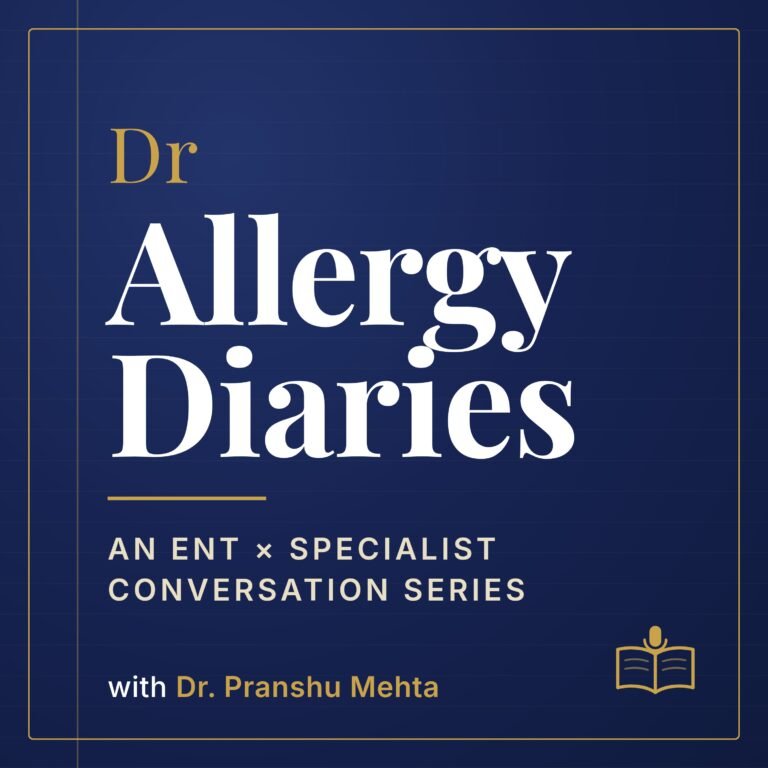 🎙️ Free podcast & video seriesDr Allergy Diaries — allergy is never just a sneezeHow allergy affects your ears, sleep, teeth, skin and lungs — explained with a different specialist every episode.
→
🎙️ Free podcast & video seriesDr Allergy Diaries — allergy is never just a sneezeHow allergy affects your ears, sleep, teeth, skin and lungs — explained with a different specialist every episode.
→
Tired of Living with Dust Allergy?
Get properly diagnosed and start a treatment plan that actually addresses the root cause — at Rog Nidan ENT Clinic, Janakpuri.
📱 WhatsApp +91 98186 35660